This is a project I did for my Predictive Analytics class. I worked with the assumption that in a two-sided marketplace, when information asymmetry exists, so do pricing inefficiencies. Therefore, I argued that Airbnb would benefit from introducing greater pricing transparency on its platform. I developed three models in Python: Multiple LR, XGBoost, and LightGBM, to predict price based on a 9,000+ row real data set on Berlin Airbnb listings. As expected, LightGBM and XGBoost performed pretty similarly, and I argued that if Airbnb were to implement a pricing tool like this, LightGBM would be the preferred model due to easier scaling on larger data. Below is an example of what this could look like on the host and guest side in-app. Due to its revenue model, Airbnb undoubtedly benefits from the existing information asymmetry in the short run; however, in the long run, I believe it would benefit from greater pricing transparency due to greater consumer trust and higher bookings.
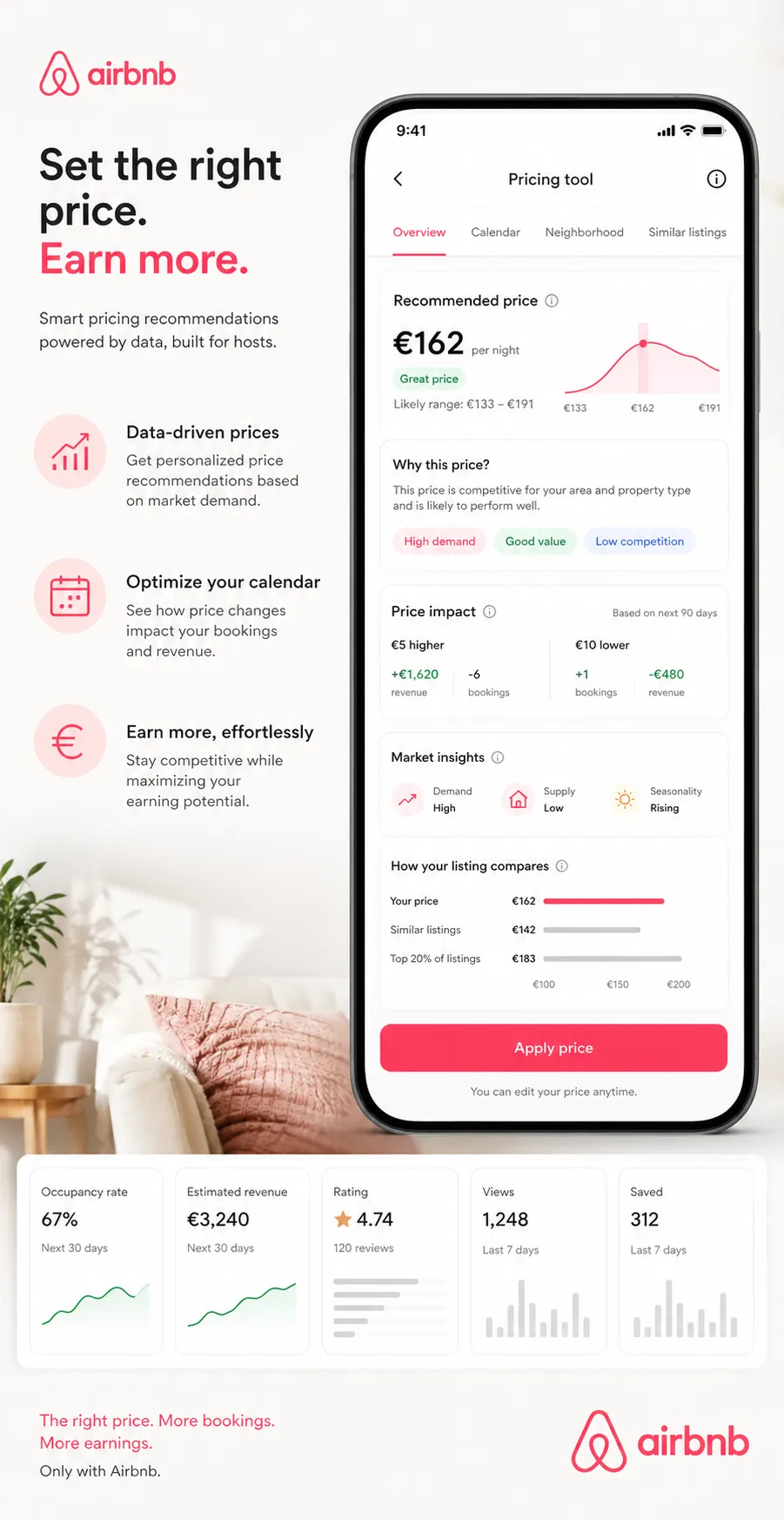 A mock-up of what the host pricing tool could look like
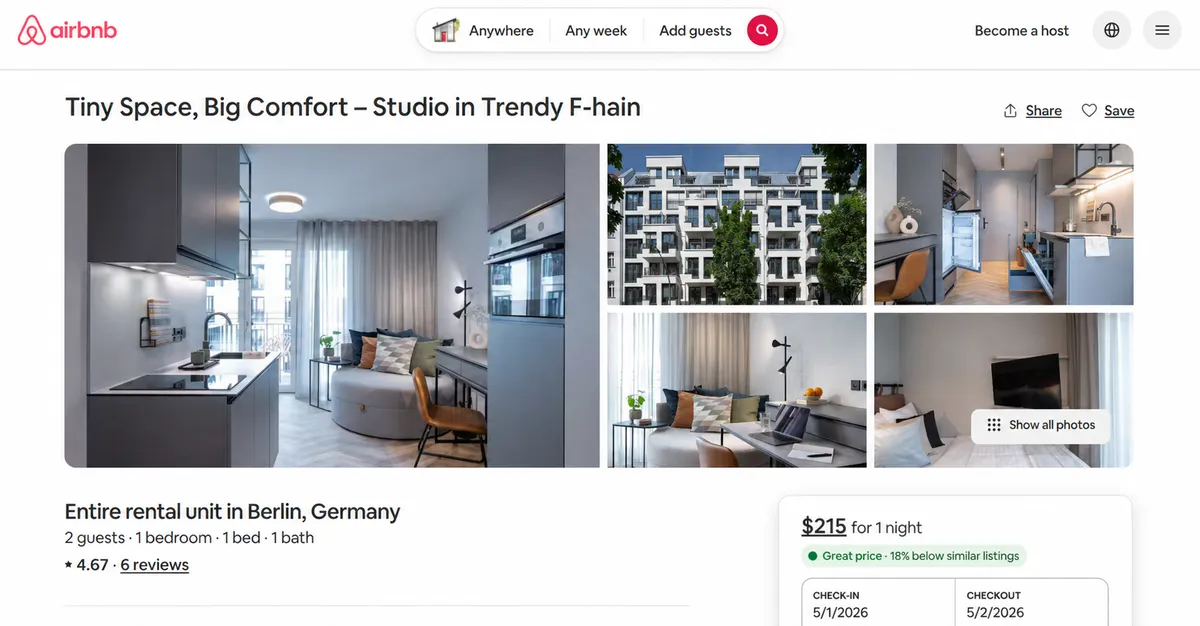 A mock-up of what the "fair-pricing" marker could look like for guests